

Food processing facilities cannot treat glove selection as an afterthought. Food safe gloves create a clean barrier between workers’ hands and food, but the glove is only one part of a safe handling program.
The FDA Food Code recognizes single-use gloves as one accepted way to prevent bare-hand contact with exposed ready-to-eat food. It also provides guidance for changing gloves and preventing contamination during food preparation.
For food processors, restaurants, commercial kitchens, and sanitation teams, the right glove needs to match the work. Material, fit, thickness, texture, powder status, and intended use all deserve attention before placing a large order.
What Makes Food Safe Gloves Different?
The term “food safe” can sound simple, but not every disposable glove should be treated as suitable for every food application.
Food facilities need gloves intended for food handling and appropriate for the tasks being performed. Buyers should also review product documentation and labeling rather than assuming every glove made from the same material has identical specifications.
Nitrile has become a popular choice for disposable food-handling gloves. It offers a useful combination of stretch, durability, tactile control, and resistance to many common substances. Nitrile also avoids natural rubber latex, which is important for workplaces looking to reduce latex exposure concerns.
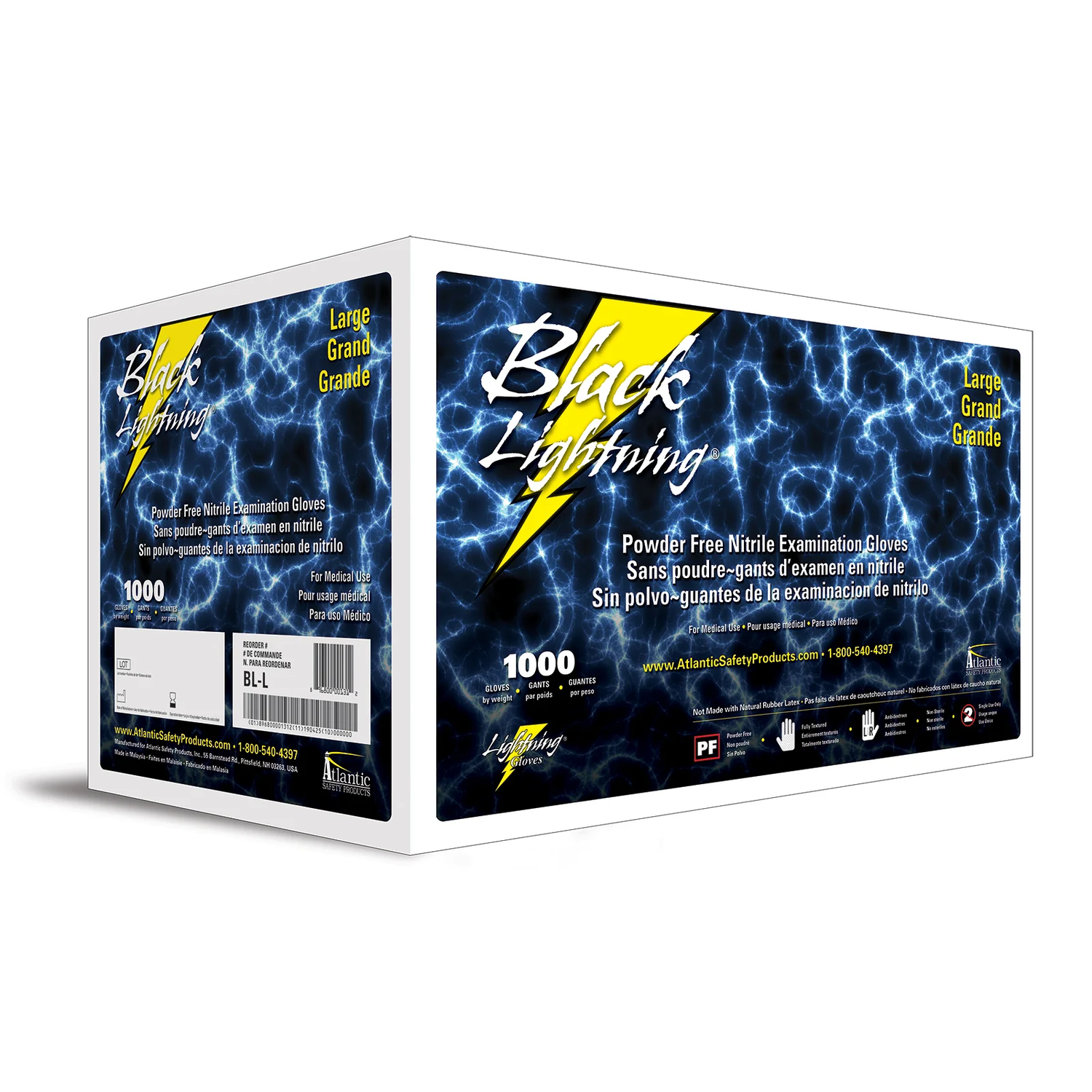
Atlantic Safety Products supplies nitrile gloves for a range of workplace applications. Its food handling glove selection guide covers factors including material, fit, thickness, and powder-free construction.
Are Nitrile Gloves Food Safe?
Nitrile gloves can be appropriate for food handling, but buyers should review the specific product rather than assume every nitrile glove has the same intended use.
A glove designed for automotive repair is not automatically the same as one intended for food preparation. The materials may be similar, but product specifications and intended applications can differ.
Food processing facilities should check product documentation for information related to food contact. They should also follow their facility’s food safety program and applicable requirements.
The FDA Food Code provides an important reference. It states that food employees may not contact exposed ready-to-eat food with bare hands and lists single-use gloves among acceptable utensils that can be used instead.
That does not mean gloves replace handwashing. Employees still need to wash their hands properly and follow established hygiene procedures.
Food Safe Gloves Should Match the Task
A food processing facility can have many glove-related tasks during one shift.
One employee may portion ingredients while another packages finished products. A sanitation crew may clean equipment between production runs, while maintenance workers handle machinery and other materials.
Using the same glove for every job can create problems.
The glove used for direct food contact should be selected for that purpose. A heavier industrial glove may work well for maintenance, but it may not provide the feel or flexibility needed for repetitive food handling.
The opposite is also true. A lightweight food-handling glove may not be appropriate for maintenance work involving sharp edges, heavy parts, or chemical exposure.
A simple task review can help buyers separate their glove needs:
-
Direct food contact
-
Ingredient handling
-
Ready-to-eat food preparation
-
Packaging and portioning
-
Equipment cleaning
-
General sanitation
-
Maintenance and repair
Once tasks are separated, it becomes easier to determine which gloves belong in each area.
Why Powder-Free Gloves Make Sense for Food Handling
Powder is another consideration for food buyers.
Powdered gloves can leave residue behind, which creates an unnecessary concern around food. Powder-free gloves remove that particular issue and are a common choice for food handling.
Atlantic Safety Products also recommends powder-free gloves for food applications as part of its food-handling guidance.
For a processing facility, that choice can simplify glove policies. Employees do not need to consider whether powder from the glove could end up on a food-contact surface.
Powder-free nitrile gloves can also work well for facilities that need one disposable glove material across several departments. A consistent glove program can simplify ordering, training, and inventory management.
Fit and Thickness Matter
A glove that does not fit properly can cause problems during repetitive work.
A glove that is too tight can restrict movement and put extra stress on the material. A glove that is too loose can interfere with dexterity and make detailed tasks harder.
Food processing often involves repetitive movements. Workers may pick, sort, portion, package, or inspect products for several hours. A glove that fits well can make those movements more comfortable.
Sizing should account for the workforce rather than assuming one size works for everyone. Keeping several sizes available can reduce the temptation to work in gloves that do not fit.
Thickness also deserves attention. Glove thickness is measured in mils, or thousandths of an inch. A higher mil rating generally means a thicker glove, but thicker does not always mean better.
Food employees often need a balance between durability and hand sensitivity. A very thin glove may tear more easily, while a thicker glove can reduce tactile feel during detailed tasks.
Grip Can Make a Difference
Wet hands, condensation, grease, oils, and food residue can affect grip throughout a shift.
That makes surface texture worth considering. A textured nitrile glove can provide more control when employees handle slippery items or tools.
Grip also affects how often workers adjust their gloves. A glove that stays secure during routine movements can make repetitive work easier.
Texture should still match the application. A heavily textured glove may not be necessary for every food-handling task, so buyers should consider what employees actually handle.
Glove Changes Are Part of Food Safety
Even a high-quality glove becomes a concern when employees wear it too long.
The FDA Food Code states that single-use gloves should be used for only one task and discarded when damaged or soiled. The code also addresses glove changes when interruptions occur during an operation.
That means glove selection and glove use have to work together.
A facility can purchase quality food safe gloves and still create contamination risks through poor glove-changing habits. Employees need clear instructions about when to remove and replace gloves.
Common reasons include:
-
The glove tears or develops a hole
-
The glove becomes visibly soiled
-
The worker changes tasks
-
The glove contacts a potentially contaminated surface
-
The worker leaves the workstation and returns
Training should cover these situations rather than focusing only on how to put gloves on.
Reliable Supply Matters
Gloves are consumable products. A facility can go through thousands of pairs in a short period, especially with multiple shifts and frequent glove changes.
That makes supply reliability part of the safety conversation.
Running short on food safe gloves can put employees in a difficult position. They may change gloves less often, use an unsuitable product, or interrupt production to find replacements.
Purchasing teams should look beyond the price of one box. Case quantities, daily usage, storage space, lead times, and reorder frequency all affect the real cost of a glove program.
Working with a supplier that provides product information and support can also make purchasing easier. Atlantic Safety Products offers workplace safety resources with product information and other materials that can help buyers review their options.
A New Food Service Option From Atlantic Safety Products
Atlantic Safety Products is preparing to expand its lineup with a new Market Edition product.
The new glove is geared toward foodservice applications, giving restaurants, commercial kitchens, sanitation teams, and similar accounts another option within the Atlantic Safety Products lineup.
For distributors, a food-focused glove can make it easier to build a product offering around specific customer needs. Foodservice accounts do not always need the same glove specifications as automotive or heavy industrial customers.
As the product becomes available, buyers should review its specifications and intended use before adding it to an established food safety program.
What Buyers Should Check Before Ordering
Choosing food safe gloves does not need to be complicated, but it does require more than looking at price.
Before ordering, purchasing teams should compare product information with the work employees perform. A practical review should include:
-
Material and food-contact suitability
-
Powder-free construction
-
Available sizes
-
Glove thickness
-
Surface texture
-
Intended application
-
Product documentation
-
Case quantity
-
Expected daily usage
-
Supplier availability
This process gives purchasing teams a clear starting point without making glove selection unnecessarily technical.
It also gives supervisors a better basis for explaining why one glove is used in food preparation while another belongs in maintenance or sanitation.
Food Safe Does Not Mean One Glove Fits Every Job
The phrase “food safe” can make glove selection sound easier than it really is.
A glove may be appropriate for food contact but still be a poor choice for a particular task. Workers need the right combination of fit, thickness, grip, and durability for the work in front of them.
Food processing facilities also need clear glove-changing procedures and strong hand hygiene practices. Gloves provide a barrier, but they do not replace proper handwashing or other food safety controls.
The FDA Food Code provides an authoritative reference for these practices. Facilities should also consider applicable state and local requirements when developing their glove policies.
Choosing food safe gloves is about more than finding a disposable glove that feels comfortable. Food processing facilities need products that fit the task, support good hygiene practices, and suit their food safety program.
Atlantic Safety Products continues to expand its nitrile glove lineup for different workplace needs, including its upcoming Market Edition. If you are reviewing your current glove program, take a look at your daily tasks and compare them with the glove specifications you use today. That simple review can help identify where a food-focused glove may be a better fit.